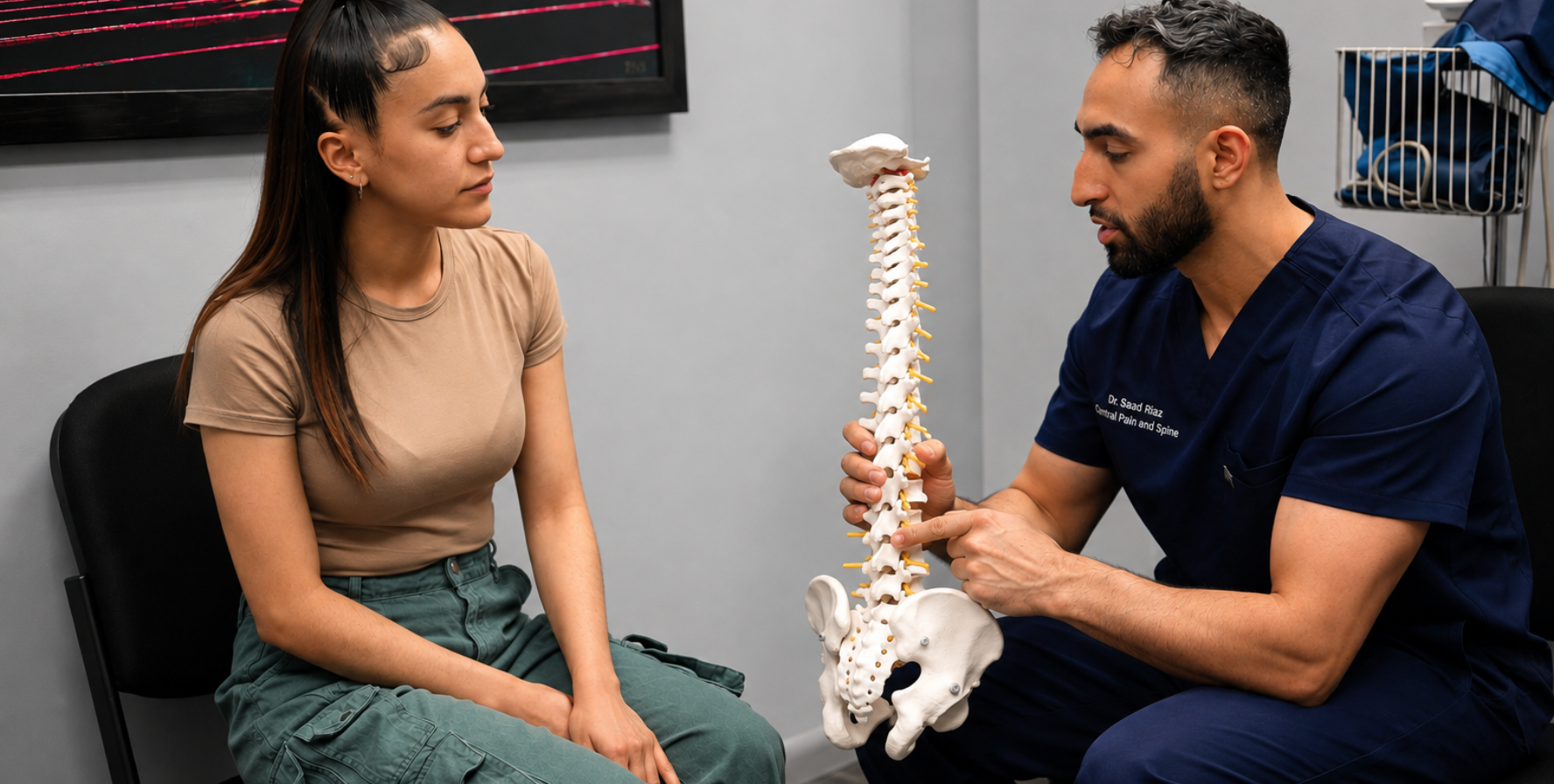
That sharp, burning pain running from your lower back into your leg, or from your neck into your arm, can disrupt work, driving, and sleep. Epidural steroid injections take a targeted approach by placing anti-inflammatory medicine in the epidural space near the irritated spinal nerve root.
What to Expect During Epidural Steroid Injections
If needles make you nervous, knowing the steps ahead of time helps. This is a
brief outpatient procedure, and you go home the same day.
For a lower-back injection, you’ll usually lie face down on the table. The skin is cleaned, then numbed so the area feels comfortable. Your doctor uses fluoroscopy, a live X-ray, to guide the needle. A small amount of contrast dye checks the position and shows where the medicine will go. The steroid is then injected slowly once placement is confirmed.
Epidural steroid injections usually take about 10 to 20 minutes, though check-in, positioning, and a short observation period add to your visit. Most patients stay awake and comfortable with numbing medicine alone, which lets you tell your doctor exactly what you feel. Expect pressure or brief stinging rather than lasting pain.
Some people notice relief within hours from the numbing medicine. That effect can fade before the steroid starts working, which commonly takes one to three days and sometimes up to a week.
Afterward, you may have some soreness around the injection site, and your usual pain may briefly feel more noticeable. Most patients can resume light activity soon, although your doctor will provide instructions based on the injection location and your overall health.
Conditions Treated by Epidural Steroid Injections
These injections work best when your symptoms follow a nerve pathway rather than staying in your back alone. Below are
some of the common reasons your doctor may recommend an epidural steroid injection.
Lumbar Herniated Discs
When disc material presses on a nearby nerve root, you may feel low back pain, leg pain, numbness, tingling, or weakness. The injection calms inflammation around that nerve, though it does not push the disc back into place.
Sciatica
Pain that travels from your buttock into your thigh, calf, or foot often stems from an irritated lumbar nerve. Reducing that irritation can make walking, sitting, and sleeping easier.
Spinal Stenosis
When the spinal canal narrows, standing and walking can bring on heaviness, cramping, or numbness in your legs. An injection cannot widen the canal, but it may improve how far and how comfortably you move.
Cervical Radiculopathy
Neck problems that pinch a nerve root can send burning pain, tingling, or weakness into your shoulder, arm, and hand. A cervical epidural injection may reduce inflammation around that nerve and ease symptoms traveling into the arm.
For some patients, this back pain relief makes it easier to return to
physical therapy and other treatments. Results vary by diagnosis and by person, and repeat treatment depends on how you respond rather than an automatic series.
Schedule Your Pain Relief Evaluation in East Brunswick or Fort Lee
You do not have to plan your life around nerve pain. The first step is finding out which nerve is involved, and that starts with a real evaluation of your symptoms, your exam, and your imaging.
Central Pain & Spine serves patients across East Brunswick, Fort Lee, Middlesex County, Bergen County, and nearby New Jersey communities. Our fellowship-trained physicians will review your history, explain your options in plain language, and help you understand whether epidural steroid injections may be appropriate for you.
Contact Central Pain & Spine today to
schedule your consultation and take the first step toward regaining your mobility.