Back or neck pain from worn facet joints is rarely dramatic. More often, it is a steady ache that follows you through a workday, catches when you turn, and makes it difficult to settle at night. When medication, therapy, and other conservative care are no longer enough, radiofrequency ablation may be one option. This non-surgical procedure can quiet pain signals for months.
How Radiofrequency Ablation Works for Lasting Pain Relief
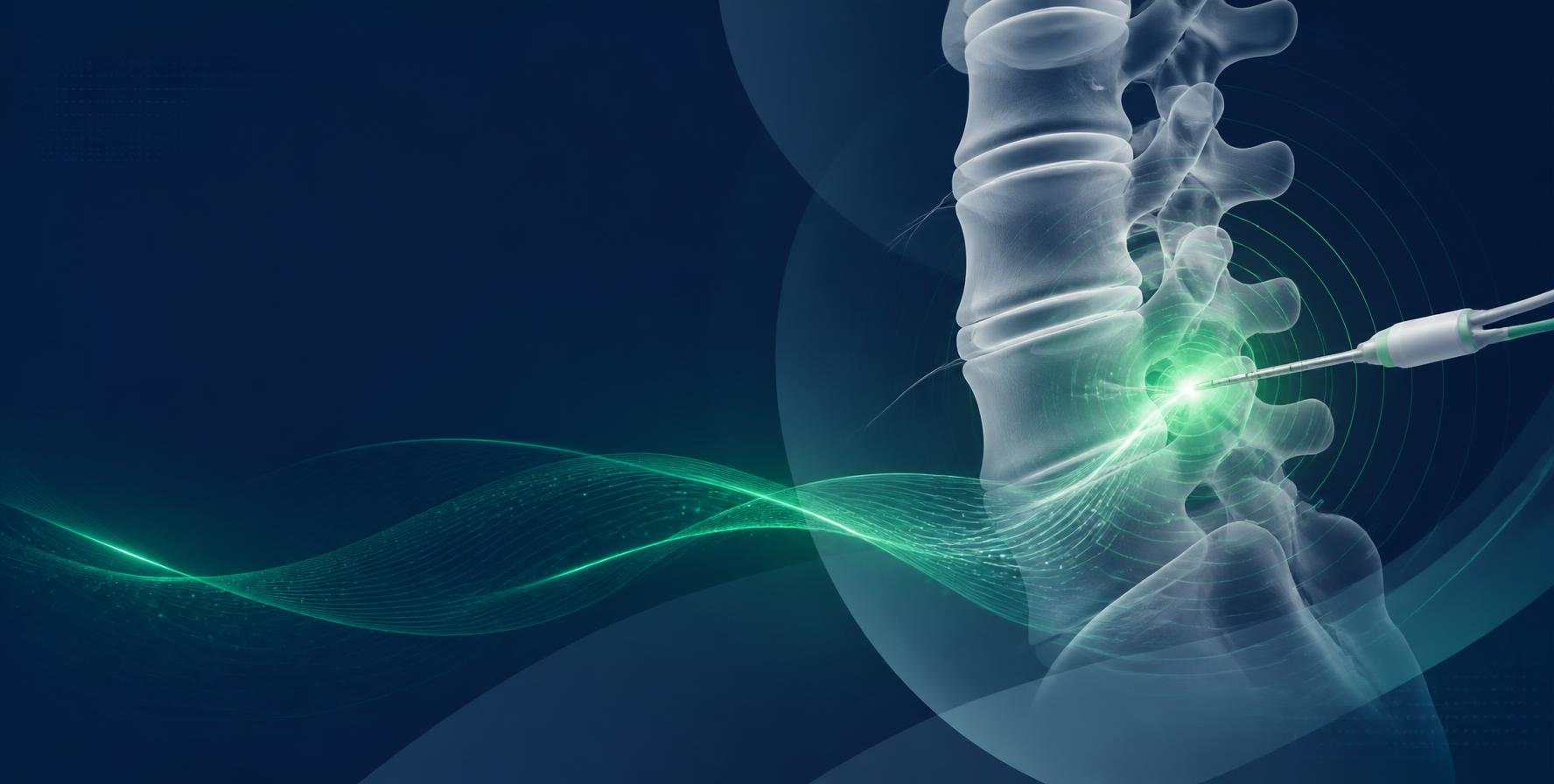
Small nerves called medial branch nerves carry pain messages from the facet joints to the brain. During radiofrequency ablation (RFA), a physician uses controlled heat to temporarily interrupt one of these nerves. A simple way to picture it is a faulty alarm: The joint starts the message, and the nerve carries it. RFA interrupts that connection for a time, so the signal is no longer sent in the same way.
RFA does not reverse arthritis or change the structure of your spine. Your physician first numbs the skin, then guides a thin needle into position with live X-ray imaging. Radiofrequency energy passes through the needle, creating a small, carefully placed treatment area around the nerve.
Everything is done through a needle puncture. As a
minimally invasive procedure, RFA:
- Requires no overnight stay
- Most patients return home after a brief recovery period
- There is no routine hospital stay
The pain RFA addresses is often linked to
spinal facet joint arthritis, which develops as the small joints at the back of the spine wear down.
Relief is not immediate for everyone, but it may last six to twelve months or longer once the treated area settles. The nerve can grow back, so pain may return. At that point, your physician can reassess the problem and decide whether another procedure makes sense.
Is Radiofrequency Ablation Right for Your Back Pain?
Radiofrequency ablation for back pain works best for the right candidate. It tends to help people whose aching stays localized in the lower back or neck rather than shooting down an arm or a leg. You may be a good fit if your pain has lasted several months, gets worse when you twist, stand, lift, or lean back, and has not eased with rest, medication, or physical therapy.
The clearest sign is how you respond to a diagnostic nerve block. Before recommending RFA, your physician numbs the suspected nerves with a small amount of anesthetic. If those blocks give you substantial, temporary relief, they help confirm the facet joint as your pain source and suggest that radiofrequency ablation may offer you longer relief. The number of blocks and the amount of relief needed can depend on your diagnosis and your insurance coverage.
Reclaim Your Daily Function at Central Pain & Spine
You do not have to let chronic back or neck pain set the limits of your day. If a deep, localized ache is keeping you from work, exercise, or time with family, lasting back pain relief may be closer than you think. The specialists at Central Pain & Spine can evaluate your symptoms, identify the likely source of your pain, and tell you whether RFA is a smart next step.
Take the next step toward better movement with Central Pain & Spine.
Dr. Riaz and
Dr. Lee see patients in East Brunswick and Fort Lee, NJ, including those from Middlesex County and Bergen County. During your visit, we will discuss what is causing your pain and whether radiofrequency ablation may be an appropriate option today.